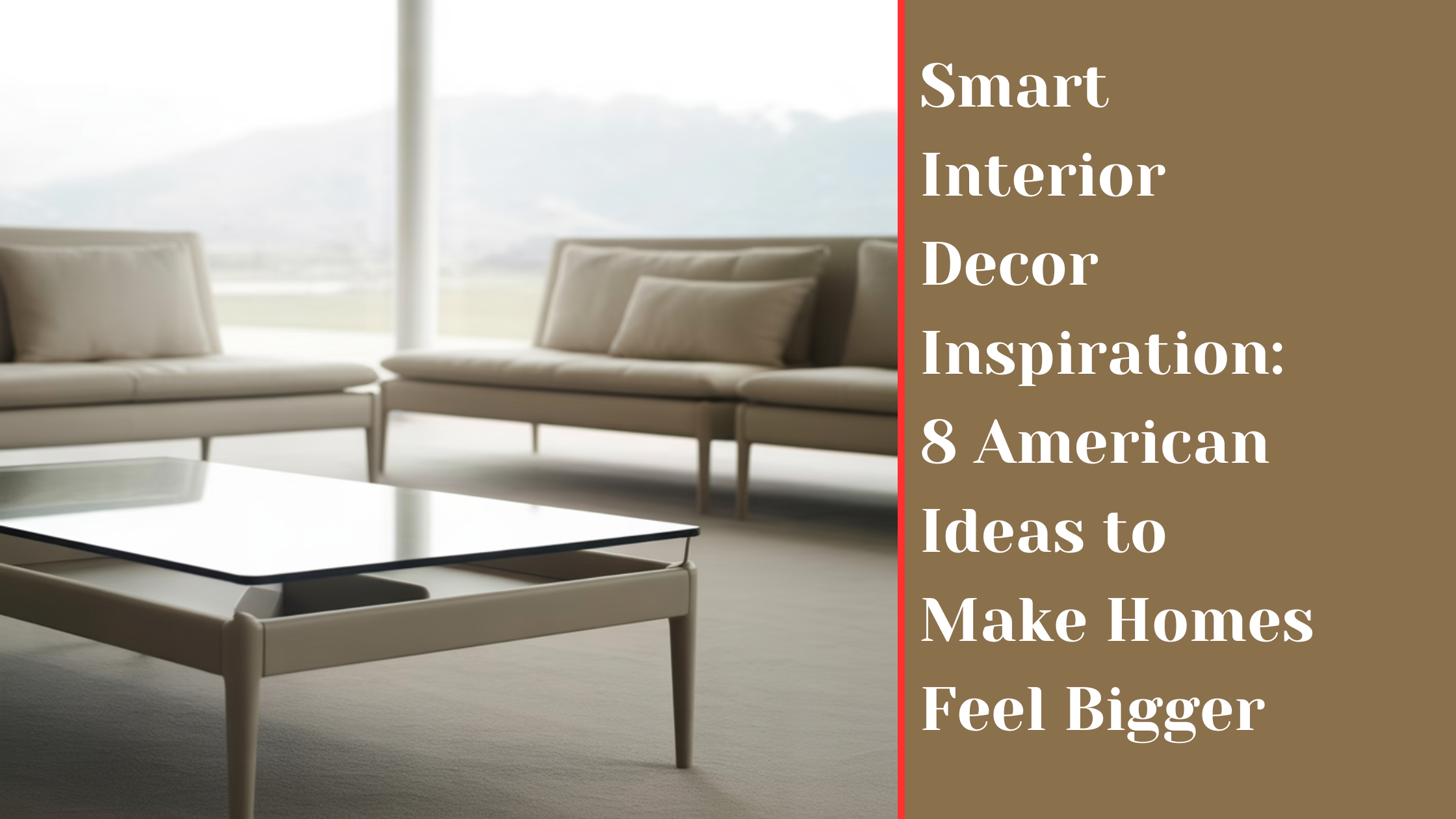
A small home can still feel open, calm, and welcoming. Space is not only about square meters. It is about how you guide the eye, how you place furniture, and how light moves through each room. Many American homes use smart decor ideas that help rooms feel wider, taller, and more comfortable. These ideas work well in apartments, condos, and compact houses. You can apply them step by step without stress or major changes.
In this guide, you will learn the meaning behind smart interior decor and how it helps a home feel bigger. You will also explore eight American-inspired ideas that focus on layout, color, light, and daily use. I will explain each idea in a clear way so you can apply it with confidence. Based on my overall experience, these ideas bring real change when you use them with care and patience.
What Smart Interior Decor Really Means
Smart interior decor focuses on clear purpose. Each item in your home serves a role. It supports comfort, movement, and visual flow. This approach avoids clutter and confusion. You choose items that fit the space and support daily life.
Smart decor also uses simple design rules. You guide the eye across the room. You create balance between open and filled areas. You allow light to travel without blocks. You avoid heavy visual breaks that cut the room into small parts.
In many American homes, smart decor grew from open floor plans and flexible living. Homes needed to support work, rest, and social time in the same space. This led to practical ideas that work well in smaller homes too.
Why American Decor Ideas Work Well in Small Homes
American interior ideas often focus on comfort and ease. They value open layouts and simple lines. Furniture often sits lower to the ground. Colors stay calm and neutral. Storage hides in plain sight.
These choices help a space feel relaxed and open. You do not feel boxed in. You can move with ease. Your eye can travel from one wall to another without stops.
Another reason these ideas work is flexibility. Many American homes change with life stages. Furniture moves easily. Rooms serve more than one role. This helps you get more use from every corner of your home.
Idea One: Open Floor Layouts That Let Rooms Breathe
An open layout removes hard breaks between rooms. Instead of full walls, you see shared space. The kitchen flows into the living area. The dining area blends into both.
This layout helps light spread across the home. Sunlight from one window reaches more areas. Shadows feel softer. The space feels wider and calmer.
You can still define areas without walls. Use rugs to mark zones. Place furniture to guide movement. A sofa can separate living and dining without blocking the view.
If removing walls is not possible, use visual openness. Choose open shelves instead of solid units. Use glass or light wood dividers. Keep sightlines clear from one end of the room to the other.
Idea Two: Neutral Color Palettes That Expand the Eye
Color has strong power over space. Light, neutral shades reflect more light. They make walls feel farther away. This helps rooms feel larger.
Many American interiors use shades like white, beige, soft gray, and warm cream. These colors feel calm and steady. They allow furniture and decor to stand out without crowding the room.
You can still add color without shrinking the space. Use soft tones like sage green, pale blue, or sand. Add color through cushions, art, or throws. Keep walls light to hold the open feel.
Avoid sharp contrast on large surfaces. Dark walls can close in a room if used without balance. If you love dark tones, use them on one small wall or in accents only.
Idea Three: Low-Profile Furniture That Keeps Sightlines Clear
Furniture height matters more than many think. Low-profile furniture sits closer to the floor. It leaves more open space above it. This makes ceilings feel higher.
American living rooms often use low sofas, slim chairs, and simple tables. These pieces feel grounded but light. They do not block views across the room.
Choose furniture with visible legs. This lets light pass under it. It also shows more floor space, which helps the room feel open.
Avoid bulky arms and thick backs in small rooms. Choose clean shapes with simple lines. This keeps the room from feeling crowded or heavy.
Idea Four: Mirrors That Double Light and Depth
Mirrors are one of the most useful tools in small homes. They reflect light and space. They create depth where none exists.
Place a mirror across from a window to reflect daylight. This spreads light deeper into the room. The space feels brighter and wider.
Large mirrors work better than many small ones. A single wide mirror creates a clear reflection. It avoids visual noise.
You can also use mirrored furniture or decor. A mirrored console or tray adds shine without bulk. Use these pieces with care to avoid glare.
Idea Five: Built-In Storage That Reduces Visual Clutter
Clutter makes rooms feel smaller. Smart storage hides items while keeping them easy to reach. Built-in storage is common in American homes for this reason.
Wall shelves that reach the ceiling use vertical space well. Cabinets that blend with wall color feel lighter. Storage benches add seating and space at once.
Choose storage with flat fronts and simple handles. This keeps the look clean. Avoid open storage for items you use less often. Too many visible items can crowd the eye.
Use hidden storage where possible. Beds with drawers, sofas with storage, and coffee tables with shelves all help keep the space clear.
Idea Six: Light Layers That Brighten Every Corner
Lighting shapes how you feel in a room. One ceiling light is rarely enough. American interiors often use layers of light.
Start with ambient light. This is your main light source. Then add task lighting like table lamps or floor lamps. Finish with accent lighting for mood.
Spread lights across the room. Avoid dark corners. Light every zone so the room feels whole.
Warm light works best for living areas. It feels welcoming and soft. Use dimmers to control mood and brightness through the day.
Natural light matters too. Keep windows clear. Use sheer curtains that let light pass while offering privacy.
Idea Seven: Vertical Design That Draws the Eye Upward
Vertical design helps rooms feel taller. This idea works well in small spaces with low ceilings.
Use tall curtains that hang close to the ceiling. Let them fall to the floor. This draws the eye up and adds height.
Choose vertical patterns for wallpaper or decor. Thin stripes or tall artwork guide the eye upward.
Shelving that reaches high also helps. Place items you use less often on top shelves. Keep lower shelves simple to avoid clutter.
Avoid cutting walls in half with dark paint or heavy trim. Keep a smooth visual line from floor to ceiling.
Idea Eight: Multi-Use Spaces That Adapt to Your Life
Many American homes rely on rooms that serve more than one role. This helps small homes feel flexible and open.
A living room can hold a work desk. A dining table can serve as a workspace. A guest room can include storage or fitness gear.
Choose furniture that adapts. Folding tables, nesting stools, and sofa beds save space. Use pieces that move with ease.
Keep each role clear through layout. A rug can mark a work area. Lighting can signal a shift in use. This keeps the space organized and calm.
How to Combine These Ideas Without Overload
You do not need to use all eight ideas at once. Start with one or two that fit your home and budget.
Focus on light and layout first. These changes bring fast results. Then look at furniture and storage.
Keep changes simple. Each choice should support the space. Avoid adding items just to fill space.
Take time to observe how you use each room. Let daily habits guide your choices. This leads to a home that feels open and easy to live in.
Common Mistakes That Make Homes Feel Smaller
Some choices can work against your goals. Too much furniture can block movement. Dark colors on large surfaces can close in space.
Heavy curtains that block light can shrink a room. Too many decor items can confuse the eye.
Large patterns can overwhelm small rooms. Stick to simple designs and calm tones.
Avoid pushing all furniture against walls. This can create dead space in the center. Try floating pieces to improve flow.
How Smart Decor Supports Comfort and Well-Being
A home that feels bigger also feels calmer. You move with ease. You find what you need without stress.
Clear space helps focus and rest. Light supports mood and energy. Order brings peace.
Smart decor supports daily life. It adapts as needs change. It helps you feel at ease in your own space.
This approach values function and feeling equally. It respects how you live, rest, and connect.
Final Thoughts on Making Your Home Feel Bigger
A bigger feel does not require a bigger home. It requires thoughtful choices and clear purpose.
American decor ideas offer practical ways to open space through light, layout, and use. These ideas work in many homes across styles and sizes.
Start small. Observe your space. Make changes that support how you live. Over time, your home will feel more open, calm, and welcoming.
Your space should support you every day. With smart interior decor, you can create a home that feels generous, balanced, and easy to enjoy.