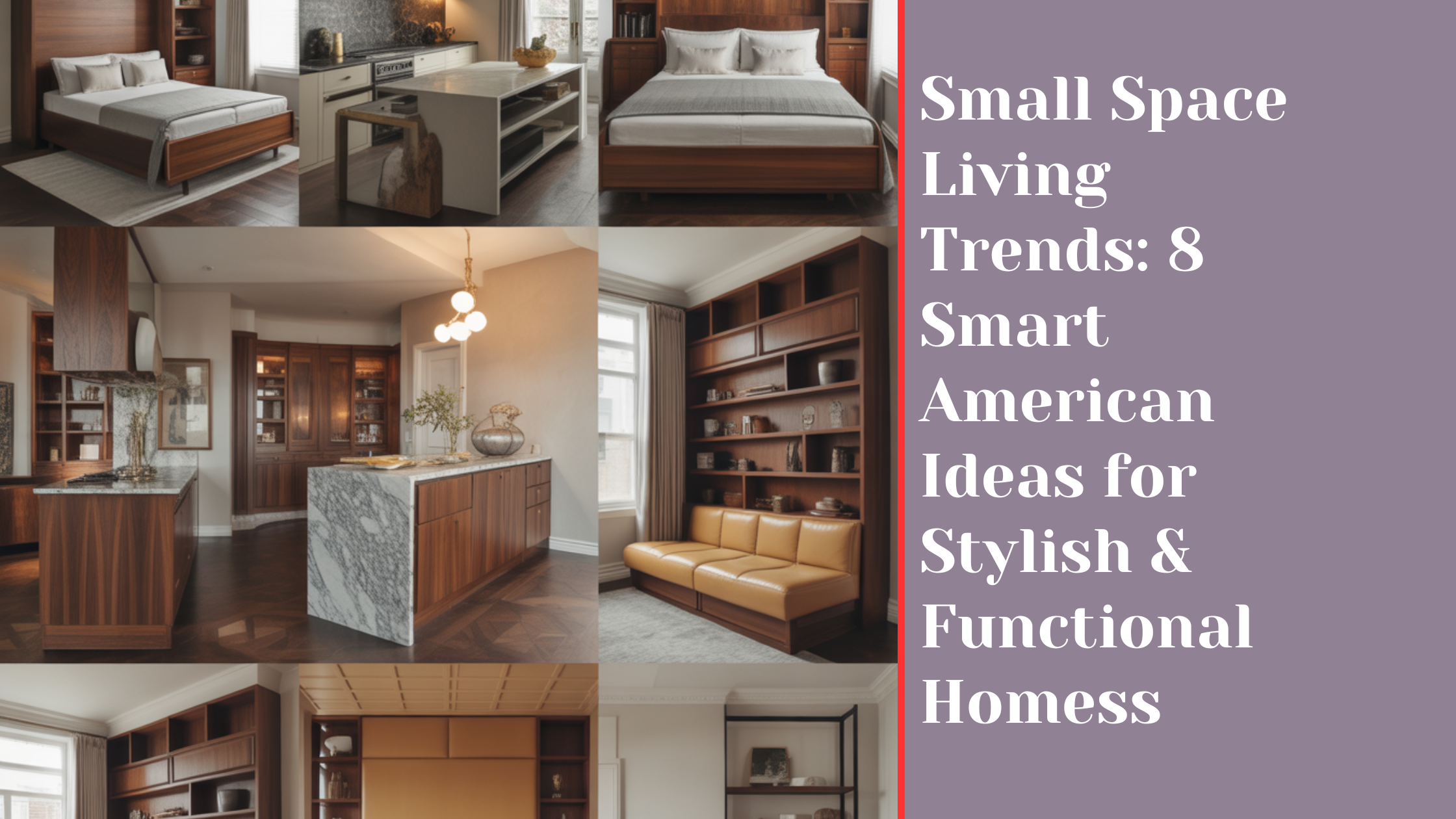
Small space living has become more than just a trend, it’s a lifestyle. With urban areas growing denser and housing costs rising, maximizing your living space while keeping it stylish and functional is essential. Whether you live in a studio apartment, a tiny house, or a compact condo, there are creative solutions that can make your home feel bigger, organized, and comfortable. From my own personal experience, even modest spaces can feel luxurious when planned thoughtfully.
In this blog, we’ll explore eight smart American ideas that transform small homes into functional, beautiful spaces. Each trend balances practicality with aesthetics, helping you make the most of every square foot.
1. Multifunctional Furniture: More Than Just Seating
One of the most powerful ways to maximize small spaces is by investing in multifunctional furniture. Think beyond a regular sofa or bed. A sofa bed, a fold-out dining table, or ottomans with hidden storage can completely change the usability of a room.
For instance, Murphy beds are gaining popularity in American small apartments. These wall-mounted beds fold up during the day, freeing floor space for work, exercise, or entertaining guests. Similarly, modular shelving units can double as room dividers, helping create distinct areas in open layouts.
From my own personal experience, investing in pieces that serve multiple purposes reduces clutter while keeping your space feeling open. Look for furniture with clean lines and neutral colors, as they tend to blend seamlessly into the décor without overwhelming the room.
2. Clever Storage Solutions: Every Inch Counts
In small spaces, storage is king. The key is to use every nook and cranny efficiently. Vertical storage, such as tall shelving units or wall-mounted cabinets, helps keep your floors clear, making the room feel larger.
Under-bed storage is another game-changer. Bins, drawers, or even rolling baskets can store seasonal clothing, extra bedding, or infrequently used items. Kitchen spaces also benefit from smart storage: magnetic knife racks, pull-out pantries, and hanging pot racks make everything accessible without crowding countertops.
Hooks and pegboards in entryways, bathrooms, or closets create additional storage for bags, accessories, and tools. From my overall experience, combining practical storage with stylish design elements ensures that functionality doesn’t compromise aesthetics.
3. Open Floor Plans with Defined Zones
Open floor plans are popular in small American homes because they create a sense of spaciousness. However, defining zones within an open space is crucial for organization and comfort. Rugs, lighting, and furniture arrangement help separate areas without building walls.
For example, a small living room connected to the kitchen can use a sofa to delineate the lounging area. A dining nook can be highlighted with a pendant light, while a compact workspace can be defined by a slim desk and chair.
Using visually light materials, like glass partitions or open shelving, keeps sightlines open while maintaining functionality. Based on my overall experience, small homes feel much more cohesive when every area has a purpose, even in an open layout.
4. Minimalism: Less is More
Minimalism has become a key trend in American small spaces. By focusing on fewer items and intentional décor, you reduce visual clutter and create a calm environment. This doesn’t mean bare walls or empty rooms—it’s about thoughtful curation.
Choose furniture and décor that are practical, high-quality, and visually appealing. For example, a sleek desk with storage drawers, paired with a simple wall shelf, provides both function and design. Keeping color schemes neutral or using one bold accent color can make a small space feel expansive and stylish.
From my own personal experience, embracing minimalism encourages mindful living. You appreciate what you keep and enjoy a space that feels clean, organized, and relaxing.
5. Smart Home Technology for Efficiency
Technology plays a major role in modern small space living. Smart home devices save space and enhance convenience. For instance, smart thermostats, voice-controlled lighting, and Wi-Fi-connected appliances reduce the need for bulky equipment and streamline daily routines.
Compact appliances designed specifically for small homes, such as combination washer-dryers, mini dishwashers, or induction cooktops, optimize functionality without taking up too much room. Even smart storage solutions like app-controlled shelving or modular furniture with built-in charging stations make life simpler.
In my experience, integrating technology thoughtfully allows small homes to function like much larger spaces, enhancing both comfort and efficiency.
6. Mirrors and Light: Amplifying Space
Mirrors are a classic trick for small spaces, and their effectiveness never fades. Strategically placed mirrors reflect light and create the illusion of depth, making rooms feel bigger. Consider mirrored closet doors, wall-mounted mirrors in hallways, or mirrored furniture surfaces.
Natural light is equally important. If possible, avoid heavy drapes and allow sunlight to flow in. Light-colored walls, reflective surfaces, and open layouts enhance brightness, contributing to the perception of a larger area.
From my own personal experience, combining mirrors with ample natural and artificial light transforms cramped spaces into airy, inviting rooms. Even small touches, like reflective picture frames or metallic finishes, can make a surprising difference.
7. Vertical Gardens and Green Accents
Bringing nature indoors not only improves air quality but also adds depth and life to small spaces. Vertical gardens, hanging planters, and small potted plants are perfect for compact homes. They add color and texture without consuming valuable floor space.
Succulents, herbs, and low-maintenance houseplants are ideal for urban apartments. A small indoor herb garden near the kitchen can be both functional and decorative. Wall-mounted plant shelves or cascading planters can transform a bland corner into a focal point.
Based on my overall experience, even a small dose of greenery can dramatically enhance the atmosphere, making your home feel vibrant, cozy, and visually appealing.
8. Personalization Through Art and Accessories
Finally, small spaces still need personality. Art, textiles, and accessories reflect your style and make your home feel lived-in and welcoming. Vertical displays, gallery walls, and modular shelving for collectibles allow you to showcase your taste without overwhelming the space.
Textiles, such as rugs, throws, and pillows, introduce texture and warmth, making compact spaces cozy. Consider multifunctional décor, like decorative baskets or storage boxes, to blend style with utility.
From my own personal experience, small spaces feel more inviting when curated thoughtfully. Every item should have meaning, purpose, or both, balancing beauty with practicality.
Conclusion: Making Small Spaces Work for You
Small space living doesn’t mean sacrificing comfort or style. By embracing multifunctional furniture, clever storage, open floor plans, minimalism, smart technology, light, greenery, and personalization, you can create a home that feels spacious, organized, and uniquely yours.
From my own personal experience, small spaces encourage creativity and intentionality. Every decision—from furniture placement to décor—affects how your home functions and feels. These American-inspired ideas prove that even the tiniest homes can be stylish, functional, and truly comfortable.
By implementing these trends, you not only maximize square footage but also enhance your quality of life, making small space living a positive, enjoyable experience.